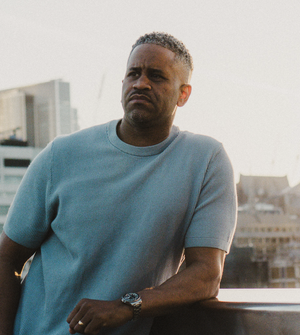
When a man finally decides to get help, there's a good chance he'll be sitting across from a woman.
That's not a bad thing. Some of the best therapists I know are women, and many men do brilliant work with them. But it does mean that for most men, therapy happens without ever sitting with a man who listens, understands and doesn't judge.
I'm a male psychotherapist, and I think that matters more than we admit. When I went into my own therapy, I knew I wanted to see a man. I had things to work through about my father, and about men more generally. I'd had difficult relationships with men for much of my life. I wanted someone who represented masculinity, who would stir up those feelings in the room, so I could finally work through them rather than avoid them. And I desperately wanted to sit with a man who had found a way to manage his life, who had tools I didn't have yet, but who also understood my reality. I think many men are looking for exactly that.
How few male therapists are there?
Very few.
Around 1 in 5 UKCP-registered psychotherapists are men (UKCP, 2024). In counselling it's lower still, at about 1 in 6 (BACP, 2025).
Meanwhile, men in England and Wales are around three times as likely as women to die by suicide (ONS, 2024), and less likely to use NHS talking therapies (NHS England, 2025).
Men are the ones most at risk, and the least likely to find a therapist who is a man.
Why don't men become therapists?
There's no single reason, but these come up again and again:
Therapy is seen as women's work. Listening, caring and talking about feelings were things many of us were taught weren't for men. Few boys grow up imagining themselves as therapists.
Men don't go to therapy, so they don't become therapists. Many therapists find the work after being helped by it themselves. If men don't walk into the room as clients, far fewer end up in the other chair.
Training is long and expensive. Becoming a psychotherapist usually takes four years or more, with course fees, your own therapy and long unpaid placements. That's hard if you're the main earner or supporting a family. It's harder still for many Black men, who are less likely to have family wealth to fall back on while they train, and who rarely see anyone like them on the course or teaching it.
It doesn't look like a "man's" career. Status, money and provision still shape many men's choices. Caring work is often lower paid and less respected.
There are few role models. It's hard to picture yourself doing something when you've never seen a man do it.
The result is a cycle. Fewer men in therapy means fewer male therapists, and fewer male therapists means fewer men feel therapy is for them.
The power of a male therapist
Men can be helped by any good therapist. But a male therapist can offer some things that are hard to find anywhere else.
A role model, not just a listener. Many men have never seen a man be honest about fear, sadness or shame and still be strong. Sitting with a man who can hold all of that, calmly, shows you it's possible. You don't just talk about a different way of being a man. You experience it.
He knows the world you live in. A male therapist has lived as a man. He knows the pressure to provide, to perform, to stay in control and never look weak. He knows what it's like in the changing room, the boardroom and the group chat. You don't have to explain the rules, because he's had to live by them too.
You can say it without editing it. Many men censor themselves with a woman in the room, often without realising. They soften their anger. They skip the parts about sex, porn or the thoughts they're most ashamed of. They worry about how they'll come across. With a man, many find they can say the thing as it is, and that's often where the real work starts.
A different kind of intimacy. Most men have known closeness with women: a mother, a partner, a sister, a friend. But many have never had real emotional closeness with a man. Their father was absent, or present but distant. Friendships stayed at banter and football. So when a man is truly seen and cared for by another man, without judgement and without a joke to break the tension, something shifts. For some, it's the first time in their lives.
Healing the father wound. For men who grew up without a father, or with one who couldn't show warmth, a male therapist can offer some of what was missing: steadiness, respect, challenge and care from an older man. It doesn't replace what was lost. But it can help a man stop chasing it in other places.
Is a male therapist always better for men?
No. What matters most is the relationship: feeling safe, understood and able to be honest. Some men open up more easily with a woman, and that's completely valid.
But men should have a real choice. Right now, most don't. If you've only ever tried therapy with a woman and it didn't quite reach the parts you needed it to, it may be worth trying with a man.
Why I built UNBOUND for men
That's why UNBOUND is for men, by men. I'm a male therapist, and our group courses bring men together with other men, because something powerful happens when men are honest with each other and the room leans in rather than looks away.
If you've been looking for a man to talk to, you've found one. Find out about one-to-one therapy for men, in person in Hackney, London, or online.
Frequently asked questions
How many therapists in the UK are men? Around 1 in 5 UKCP-registered psychotherapists and about 1 in 6 BACP counsellors are men.
Why are there so few male therapists? Therapy is often seen as women's work, fewer men go to therapy themselves, and training is long and costly with little early pay.
Is it better for a man to see a male therapist? Not always. The most important thing is the relationship. But many men find it easier to be completely honest with a man, and value having a male role model in the room.
Can I ask for a male therapist? Yes. You can always ask, and most directories let you filter by gender.
Is therapy confidential? Yes. What you share stays between you and your therapist, apart from rare situations where someone is at serious risk. Your therapist will explain this at the start.
Ready to talk? Book a free 20-minute call to see if we're the right fit.
https://calendly.com/suit-maktuno/30min?month=2026-11
Maktuno Suit is a UKCP-registered psychotherapist with over 15 years' experience and the founder of UNBOUND, a London practice for men. UKCP profile