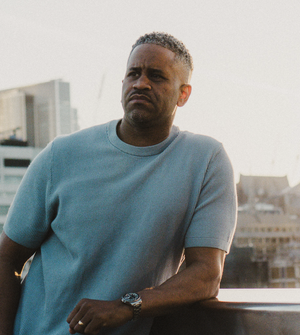
Why Black men don't go to therapy, and why that's changing
Growing up, I never heard anyone in my world say "I'm seeing a therapist." Not my family, not my friends, not the men at church. If something was wrong, you prayed, you pushed through, or you kept it to yourself.
Now I'm a Black British psychotherapist, and I sit with Black men every week who were raised the same way. Most of them nearly didn't come. So let's talk honestly about why, and why I think that's starting to change.
"Therapy isn't for us"
This is the line I hear most. It usually means a few different things.
We were taught to be strong. Many of us grew up being told to man up, keep it moving and never let them see you sweat. For generations, strength meant survival. Showing weakness wasn't just embarrassing; it could feel dangerous.
We don't trust the system. A lot of Black men have been let down by schools, the NHS or the police, or have watched it happen to people they love. So when therapy looks like another service, the guard goes up. That's not paranoia. It's experience.
We worry we won't be understood. Many men fear sitting with a therapist and having to explain their culture, their family or racism from scratch, or being quietly judged for it. Some worry they'll be seen as aggressive the moment they raise their voice.
We keep it in the family. Problems are handled at home, or taken to God. Talking to a stranger can feel like a betrayal.
It costs money. Private therapy isn't cheap, and many men are carrying responsibility for others.
What it costs to stay silent
These reasons are real. But so is what happens when we hold everything in.
I see it in men who are angry all the time and don't know why. Men who can't switch off. Men whose relationships keep breaking down in the same way. Men carrying pain from childhood, from fathers who weren't there, from racism they've had to swallow at work for years. Men using porn, drink, work or anything else to numb it.
None of that makes a man weak. It makes him human, with nowhere to put it.
Why it's changing
Something is shifting, especially among younger Black men. Conversations about mental health are happening on podcasts, in barbershops and on social media. Men are seeing other men they respect talk openly about therapy. And there are more Black therapists than there used to be, although there still aren't nearly enough.
More men are realising that getting help isn't a betrayal of who they are. It's how you stop passing pain down to the next generation.
What good therapy for Black men looks like
If you're thinking about it, here's what to look for:
A therapist who gets it. You shouldn't have to educate them about your life. Some men want a Black therapist; others don't mind. Either way, it's fine to ask.
Plain talk. No jargon, no talking down to you.
Something practical. Depth matters, but you should leave with steps you can use in real life.
Respect for your faith and family. These are part of who you are, not problems to be fixed.
Confidentiality, explained clearly. Ask exactly what is and isn't shared, and with whom.
Your first step can be small
You don't need to be in crisis, and you don't need the right words. Most men start with a short conversation to see how it feels.
At UNBOUND, I offer therapy for Black men in Hackney, East London, and online. You won't have to explain yourself here.
https://www.unboundformen.com/therapyforblackmen
Frequently asked questions
Can I ask for a Black therapist? Yes. It's completely reasonable to want a therapist who shares or understands your background, and to ask about it on a first call.
Is therapy confidential? Yes, within professional limits a good therapist will explain at the start. Nothing should go to your GP or employer without your agreement.
What if I don't know what to say? That's normal. A good therapist will help you find the words at your own pace.
Do I have to be religious to see a Christian therapist? No. I work with men of all faiths and none, and bring faith in only if you want it.
Ready to talk? Book a free, confidential 30-minute discovery call, or send a WhatsApp message.
https://calendly.com/suit-maktuno/30min?month=2026-11
Maktuno Suit is a Black British, UKCP-registered psychotherapist with over 15 years' experience and the founder of UNBOUND, a London practice for men.