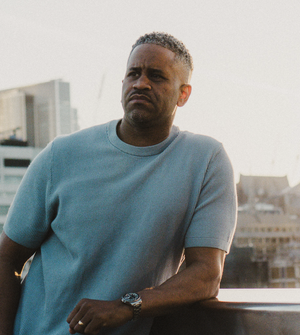
Russell Brand. And so many more men in the news. It's depressing.
On 5 November 2026, a jury at Southwark Crown Court found Brand guilty of one rape and three sexual assaults against four women between 2004 and 2009. He denied all the charges and was cleared of three others. On 9 November he was sentenced to ten and a half years in prison. Sentencing him, the judge said: "About 20 years ago, Russell Brand, you were becoming famous... You had also become a sexual predator."
The first thing to say is that this is about four women and what was done to them. Their courage in coming forward matters more than any lesson the rest of us draw.
But it does leave a question every man should sit with: why do things go so wrong, so often, when men get power?
Power makes whatever is in you louder
Power feeds the ego. It feeds entitlement. It removes the friction.
When you're on the way up, people say no to you. They push back, they challenge you, they tell you when you're out of line. As your power grows, that friction falls away. Fewer people tell you the truth. The people around you start to need something from you: a job, access, approval. The usual checks disappear, and whatever was already in you gets louder.
That's the uncomfortable part. Power rarely creates something new in a man. It amplifies what was already there: the hunger to be wanted, the anger, the sense of being owed, the wound he never dealt with.
The more power you have, the bigger your shadow becomes.
Every man has a shadow
In therapy we talk about the "shadow": the parts of ourselves we don't want to see, so we push them out of sight. Insecurity dressed up as confidence. Loneliness dressed up as charm. A need for control dressed up as leadership.
The shadow doesn't go away because we ignore it. It goes underground and finds other ways out, usually when we're tired, stressed or feel untouchable. And the less anyone is allowed to challenge us, the more room it has.
This isn't just about celebrities. It's the manager who starts treating his team as an audience. The pastor nobody questions. The father whose word is never challenged at home. Power comes in many sizes, and most men have some.
The question isn't whether you have power
So the real question for men is: what do I do with power and influence, and what's keeping it in check?
It's not enough to have good intentions. Most men who cause harm didn't set out to. What protects us is not willpower but structure: people and practices that keep us honest when our ego would rather not be.
You need people who aren't impressed by you
Every man with power needs people around him who aren't impressed by it.
People who will challenge his character, not just his decisions. People who know him well enough to notice when he's changing. People who will honestly tell him who he is becoming, and whom he has given permission to do it.
That might be:
A friend who knew you before the title and still talks to you the same way.
A small group of men who meet regularly and are allowed to ask hard questions.
A partner whose concerns you take seriously rather than manage.
A therapist, someone outside your world with no stake in your success, whose job is to help you see what you'd rather not.
The key word is permission. Feedback only works if you've decided in advance that you won't punish the person who gives it.
The encouraging part
Here's what gives me hope. Through UNBOUND, I'm seeing more and more senior leaders in business, churches and institutions come to therapy wanting exactly this.
Not because something has gone wrong, but because they want accountability. They want checks in place so their integrity holds as their influence grows. They want to understand their shadow before it costs them, or someone else, everything.
That takes humility, and it's a sign of real strength.
Three questions to ask yourself this week
Who in my life can tell me I'm wrong, and do they?
Where do I have power (at work, at home, in church, online), and how am I using it?
What part of me do I least want anyone to see? That's often where the work is.
Men, find someone you'll give permission to tell you the truth.
Therapy for leaders and men with influence
At UNBOUND, I offer confidential one-to-one therapy for men, including senior leaders who want to grow in self-awareness and integrity. I've worked with leaders in business and with men in the criminal justice system, and I understand both the pressures of power and what happens when it goes unchecked.
https://www.unboundformen.com/therapyformen
Frequently asked questions
Why does power change people? Power reduces the everyday friction that keeps us honest. People challenge us less, we get what we want more easily, and existing traits like entitlement or insecurity are amplified.
What is the shadow in psychology? The shadow is a term for the parts of ourselves we don't acknowledge, such as insecurity, anger or unmet needs. Left unexamined, they tend to show up in our behaviour, especially under pressure.
Is therapy useful for leaders who aren't in crisis? Yes. Many leaders use therapy to stay grounded, understand their patterns and make sure their character keeps pace with their influence.
Is it confidential? Yes. Therapy is confidential within the professional limits explained at the start. Nothing is shared with your organisation, board or church without your agreement.
Ready to talk? Book a free, confidential 30-minute discovery call.